

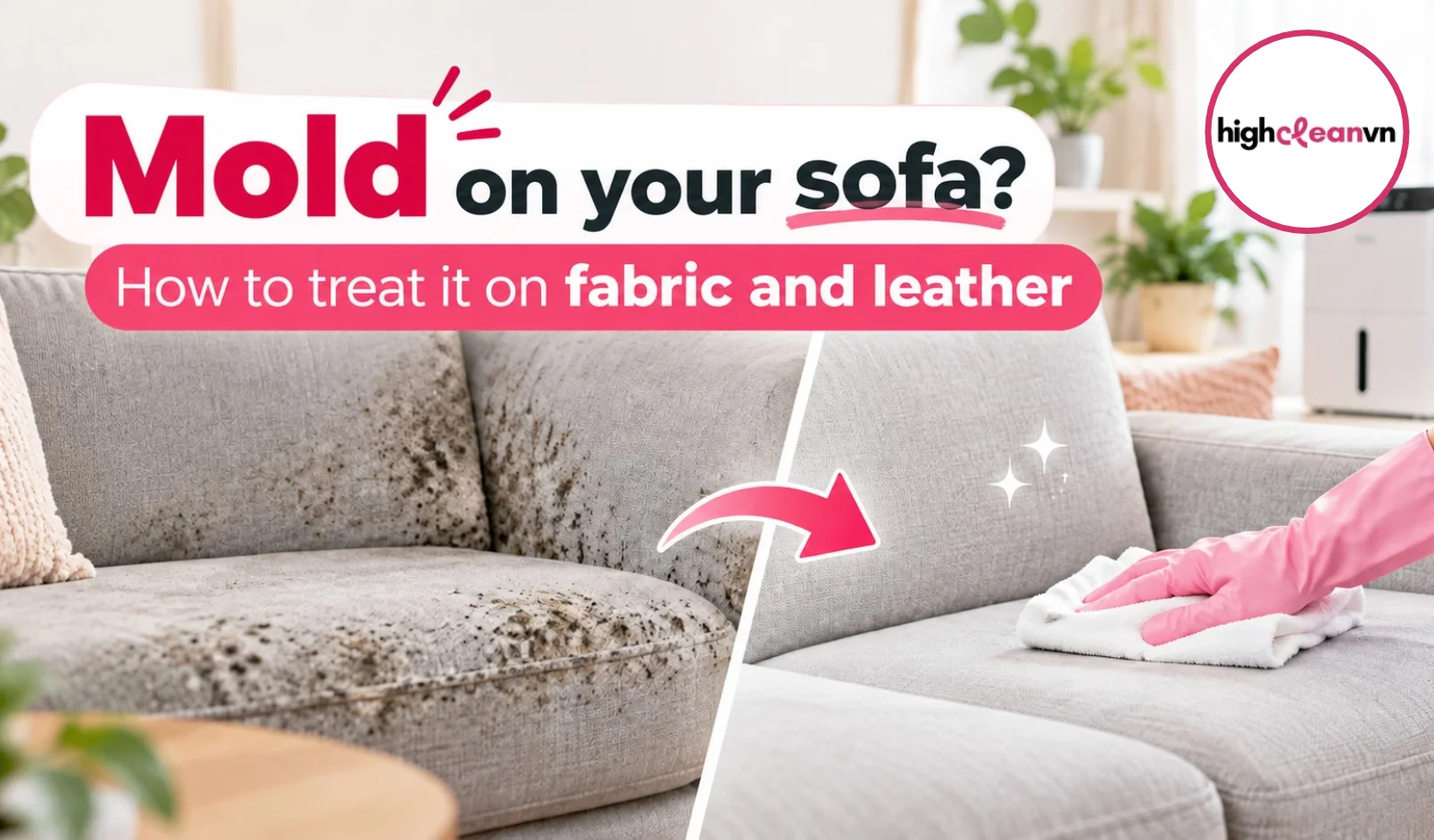
Mold on your sofa? How to treat it on fabric and leather
After a muggy spell in the North or a long rainy season in the South, many households find faint white patches or small black dots on the back of the sofa, under cushions or along seams, with an unpleasant damp smell. That is mold. It damages the sofa and affects the health of the people sitting on it.
The US EPA puts it plainly: the key to controlling mold is controlling moisture. Wipe off mold without drying things out and it grows back within weeks. So this guide goes in order: dry, clean, then prevent it returning.
Why sofas get moldy
- Long spells of high humidity: muggy weather, constant rain, closed rooms with little airflow. Mold can grow on almost any material when there is moisture.
- Getting wet and not drying in time: spills, a home clean with too much water, or rain through a window.
- Sitting against a cold wall or by a window: moisture condenses on cold surfaces and soaks into the sofa.
Light mold or heavy mold?
| What you see | Level | What to do |
|---|---|---|
| Damp smell, a few small surface spots | Light | Treat it yourself with the steps below |
| Large or many patches, strong smell | Moderate | Dry it now and call a professional |
| Mold deep in the foam, rotting cushions, or flood-soaked | Heavy | Consider new cushions or a new sofa |
The EPA notes that absorbent materials that have grown mold may need replacing. The CDC likewise advises discarding upholstered furniture that cannot be cleaned or dried quickly after flooding.
Preparation and safety
- Wear a mask (ideally an N95, as the CDC advises for mold cleanup) and gloves.
- Open windows, and keep children and pets out of the room.
- Move the sofa somewhere airy if you can, so spores do not spread through the house.
- Never mix bleach with ammonia or any other cleaner.
Treating mold on fabric and felt
Step 1: Dry the sofa and the air first
On muggy days, close up and run a dehumidifier or the air conditioner on Dry, with a fan blowing on the sofa. Doctors at Tam Anh Hospital advise keeping indoor humidity around 30–50% in the wet season.
Step 2: Vacuum thoroughly
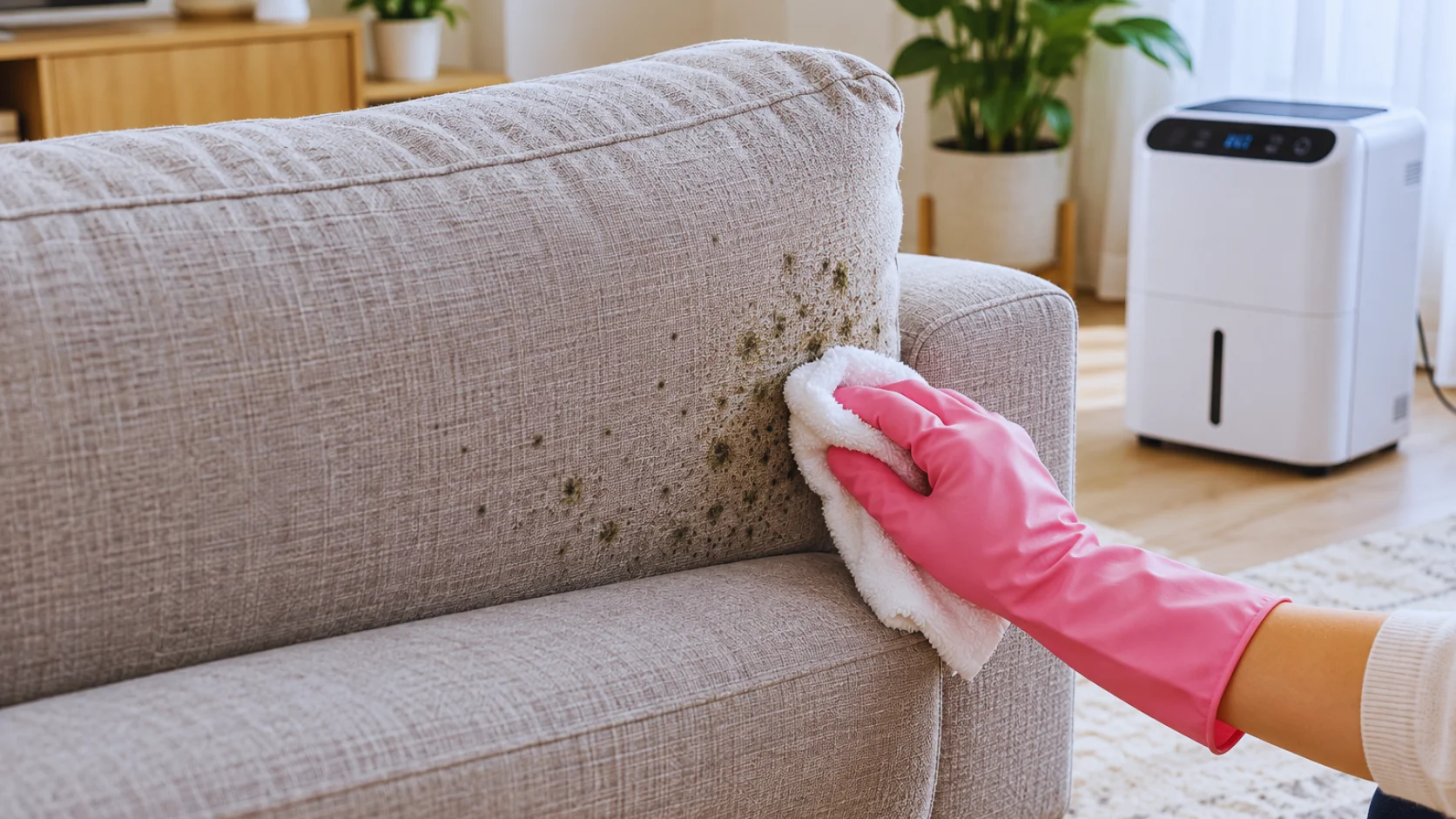
Vacuum the whole surface, gaps and seams, where spores collect. A HEPA vacuum traps spores better than an ordinary one. Empty it outdoors afterwards.
Step 3: Dab mold spots with diluted vinegar
Mix white vinegar and water 1:1, the ratio VnExpress suggests for light mold, including on carpet. Dip a soft cloth, wring it out hard and dab each spot. Test a hidden spot first. Do not soak the whole panel.
Step 4: Dry it completely
Use a fan or a hair dryer on cool until it is completely dry, and leave the sofa somewhere breezy. This step decides whether the mold comes back.
Step 5: Remove the musty smell
Once dry, sprinkle baking soda thinly, leave it a few hours or overnight, then vacuum to absorb the remaining musty smell.
Treating mold on leather
- Dry the room as in step 1 above.
- Wipe the spots gently with a soft, barely damp cloth and mild (neutral) soap, then dry with a clean cloth.
- Cleanipedia suggests mixing alcohol and water 1:1 to wipe moldy leather. Alcohol can dry and fade leather, so use very little on the spots only, and test first.
- Let it air-dry, with no heat and no strong sun.
- Condition the leather afterwards so it does not dry out or crack.
Stopping mold coming back
- Keep living-room humidity around 30–50% with a dehumidifier or air conditioner; the EPA advises below 60%.
- Leave a few centimetres between the sofa and the wall so air circulates behind it.
- Wipe and dry spills straight away; the EPA advises drying damp items within 24–48 hours.
- When cleaning it yourself, use little water and dry it fully before sitting on it.
- Vacuum regularly and flip and rotate cushions so they air.
- On muggy days, close the windows instead of letting damp air in.
Do
- Dry the room and sofa before cleaning
- Wear a mask and gloves
- Dab spots with a well-wrung cloth
- Condition leather after cleaning
Don't
- Spray perfume over the smell
- Use bleach on fabric or leather
- Wet a whole panel and close the room
- Mix cleaning products
When to call a professional
Small surface mold you can handle yourself. Spreading mold, a smell that stays after drying and cleaning, or mold in the foam needs professional spray-and-extract cleaning to clean deep and pull the moisture out, or new cushions.
Moldy, musty sofa? Moldy
HighCleanVN cleans sofas at your home by material, fabric, felt or leather: deep cleaning, deodorizing and sanitizing, dry in 2 hours. Send a photo for advice and a quote first.
Frequently asked questions
Is it safe to keep using a moldy sofa?
Light mold that has been treated and dried is fine. With widespread mold, or anyone with allergies or asthma at home, treat it thoroughly or replace the cushions, since spores can cause allergies and asthma attacks.
Does vinegar kill mold on a sofa?
Vinegar diluted 1:1 works for light mold on fabric. Drying the sofa and keeping the room dry matters more, or the mold will return.
Will putting the sofa in the sun kill the mold?
Sun dries it but fades fabric and dries and cracks leather. Airing it somewhere breezy with a fan and dehumidifier is safer.
Why does the mold keep coming back?
Because the humidity is still high. The EPA says moisture control is the key: keep the room around 30–50%, leave space behind the sofa and dry it as soon as it gets wet.

Huy Bui KhanhTechnician
Hi, I'm Huy, a technician at HighCleanVN. Every day, I visit customers' homes to clean their mattresses and sofas. Here, I share practical tips and experience on mattress and sofa cleaning, drawn straight from my daily work.
Further reading
 How to get rid of sofa smells at home: musty, sweat and pet urineA sofa smell that air freshener never quite fixes? Find what is causing it, then treat it with things you already have at home, from musty damp to cat and dog urine.