


How to get rid of sofa smells at home: musty, sweat and pet urine
You sit down and catch a whiff of damp, sweat or, worse, the cat. The usual reflex is a quick spray of air freshener. A few days later the old smell is back, sometimes mixed with the perfume into something worse.
The reason is simple: the smell lives deep in the fabric and the foam, and air freshener only covers the surface. To get rid of it, find what is causing it and deal with that. Most of the time you can do it with a few things you already have.
Find the source first
Each smell needs a different fix. A careful sniff usually tells you which one you have:
| What you smell | Usual cause | What to do |
|---|---|---|
| Musty, damp | Humid weather, long rains, a closed room | Dry it first, then deodorize |
| Sweat, “body” smell | Armrests and headrests, where skin and hair touch most | Vacuum, baking soda, diluted vinegar |
| Food, milk, soft drinks | Crumbs in the gaps, spills not fully cleaned | Clear the gaps, treat the spill, then deodorize |
| Urine | Pets or a child's accident | Blot it dry and use an enzyme cleaner |
3 steps to deodorize a fabric sofa
Step 1: Vacuum thoroughly, especially the gaps
Crumbs, hair and pet fur stuck in the gaps and under the cushions hold smells longest. Take the cushions off and go over every gap and seam with a soft brush head. This step alone makes a big difference.
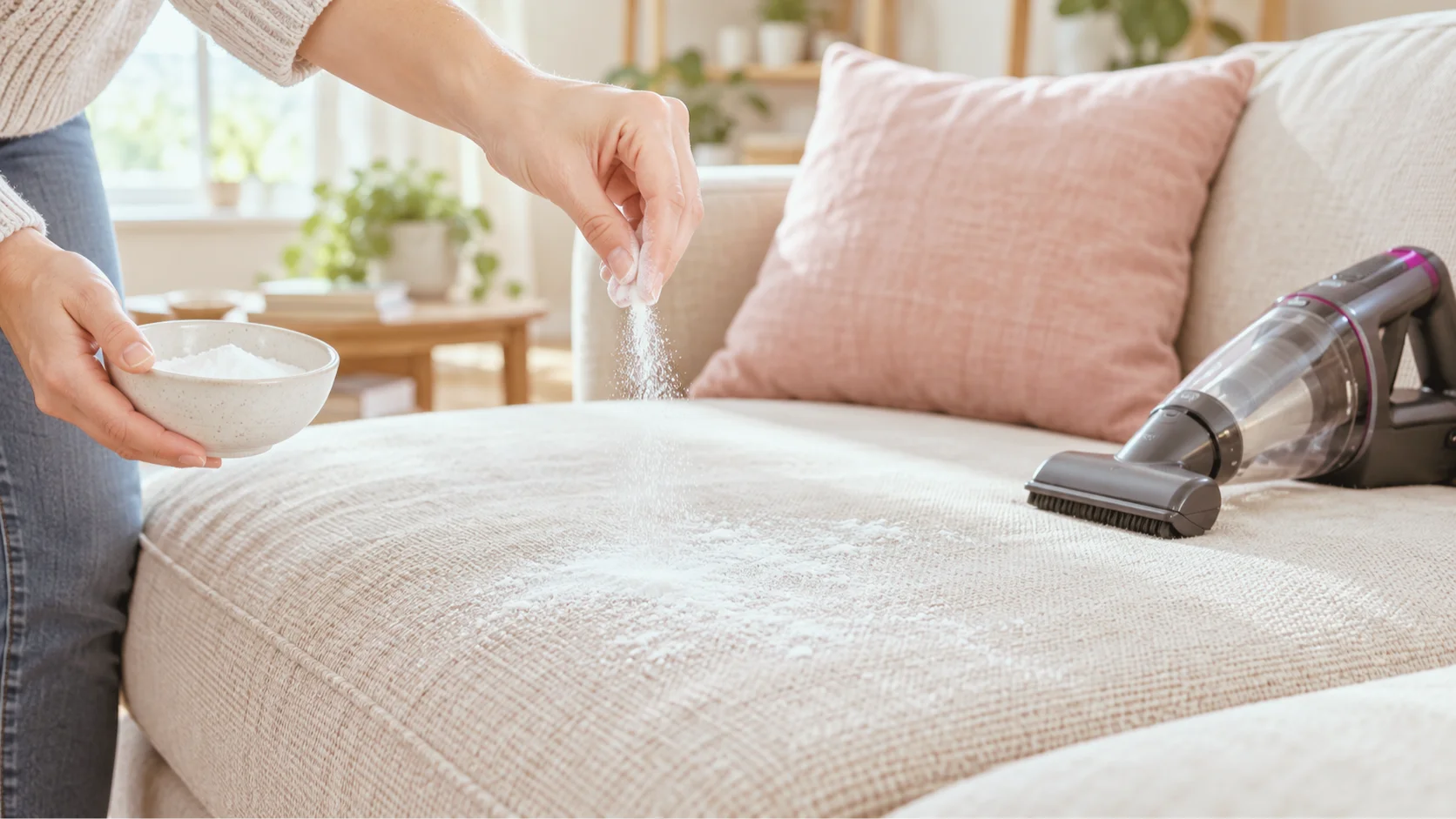
Step 2: Sprinkle baking soda to absorb odors
- Make sure the fabric is dry: baking soda works best on dry fabric.
- Sprinkle a thin, even layer over the seats and arms.
- Leave it for at least 20–30 minutes; for strong smells, a few hours or overnight.
- Vacuum it all up.
Baking soda is sold in any supermarket. It only absorbs smells; it will not lift heavy stains or grease, which need separate treatment.
Step 3: Mist with diluted vinegar
Mix white vinegar and water 1:1 in a spray bottle. Mist a very light layer over the fabric, just barely damp. Let it air-dry somewhere airy; the vinegar smell disappears as it dries.
Musty sofa in humid weather: dry first, deodorize second
In the humid northern spring or the southern rainy season, fabric and felt sofas soak up moisture easily. Deodorize while the sofa is still damp and the smell comes straight back. Go in this order:
- Dry the air: on muggy days, close up and run the air conditioner on Dry. Do not hang wet laundry near the sofa.
- Treat any mold spots: wipe gently with a soft cloth and alcohol diluted with water (test first), then dry with a hair dryer on cool.
- Deodorize: once it is dry, use baking soda as in step 2.
Keep the sofa somewhere airy so moisture escapes and the smell and mold stay away.
Removing cat and dog urine smell
This is the hardest smell to shift, and the one people most often get wrong. Here is what animal shelters recommend:
- Blot as soon as you find it: lay a thick layer of paper towels on the wet spot, cover with newspaper and press hard, for about a minute. Change the paper and repeat until the spot is only slightly damp. The more you remove before it dries, the easier the smell is to remove.
- Use a pet enzyme cleaner (sold at pet shops). Enzymes break down what causes the smell instead of masking it. Test a hidden spot and follow the label.
- Let it air-dry and sniff again; repeat if the smell is still there.
Popular tips to be careful with
- Spraying perfume: it only hides the smell briefly, and the alcohol can mark the fabric. If you want a scent, use a fabric deodorizer.
- Dried coffee grounds or orange peel: placed nearby they absorb some smell and leave a nice one, but they are only a helper. The sofa still needs cleaning.
- Putting the sofa in the sun: strong sun weakens and fades the fabric. Drying it in a breezy, shaded spot is safer.
Do
- Find the source first
- Vacuum the gaps and under the cushions
- Test every product on a hidden spot
- Use little water and wait until it is dry
- Use an enzyme cleaner for pet urine
Don't
- Spray perfume to cover the smell
- Soak it and leave the room closed
- Use vinegar or ammonia on pet urine
- Steam-clean urine stains
- Leave the sofa in strong sun
Keep the smell from coming back
- Vacuum once or twice a week, every 2–3 days for a heavily used sofa.
- Deal with spills straight away, before they dry.
- Keep the room dry and airy, especially in humid weather.
- Deep clean at least every six months, more often with kids, pets or in hot, humid months.
When to call a sofa cleaner
The methods above handle surface smells well. Call a professional when:
- The smell has reached the foam and stays after a few rounds.
- Urine stains are old or large, or a pet has gone on the sofa repeatedly.
- The sofa is expensive, the fabric is thin or prone to marking, and you would rather not experiment.
Still smells after trying at home? smells
HighCleanVN cleans sofas at your home, removing odors down into the cushions with spray-and-extract machines, safe for kids and pets. Call or send a request for advice on your sofa.
Frequently asked questions
How long should baking soda stay on a sofa?
At least 20–30 minutes. For strong smells leave it a few hours or overnight before vacuuming; the longer, the more it absorbs.
Will vinegar damage the sofa or leave a smell?
Diluted 1:1 and misted lightly, the smell is gone once the fabric dries. Still test a hidden spot, as some fabrics can fade.
Does this work on leather?
Do not spray water or vinegar on leather. Wipe it with a well-wrung damp cloth and a product made for leather.
Can cat urine smell be removed completely?
Blotting early and using an enzyme cleaner usually helps a lot. If it has soaked deep into the foam, get a professional deep clean.
How often should a sofa be cleaned?
Vacuum weekly and deep clean at least every six months; more often with kids, pets or in humid months.

Huy Bui KhanhTechnician
Hi, I'm Huy, a technician at HighCleanVN. Every day, I visit customers' homes to clean their mattresses and sofas. Here, I share practical tips and experience on mattress and sofa cleaning, drawn straight from my daily work.