


How often should you clean your mattress? 5 signs it needs it now
“How often should I clean my mattress?” is something customers ask almost every day. The honest answer has several rhythms: some things are daily, some weekly, and some only every few months. Keep up with the small jobs and the big one gets much easier.
Why a mattress needs regular cleaning
Every night a mattress collects sweat and skin flakes. That is food for dust mites, creatures so small you need a microscope to see them, which live in bedding, pillows and mattresses and thrive in humidity. The mites do not bite, but their droppings and body fragments are allergens behind sneezing, a runny nose, coughing, itching, eczema and especially asthma.
Add sweat odor, drink spills and, in humid months, mold. Regular cleaning removes smells and cuts down the bacteria and mold that can cause breathing and skin problems.
An easy mattress cleaning schedule
| Task | How often | Notes |
|---|---|---|
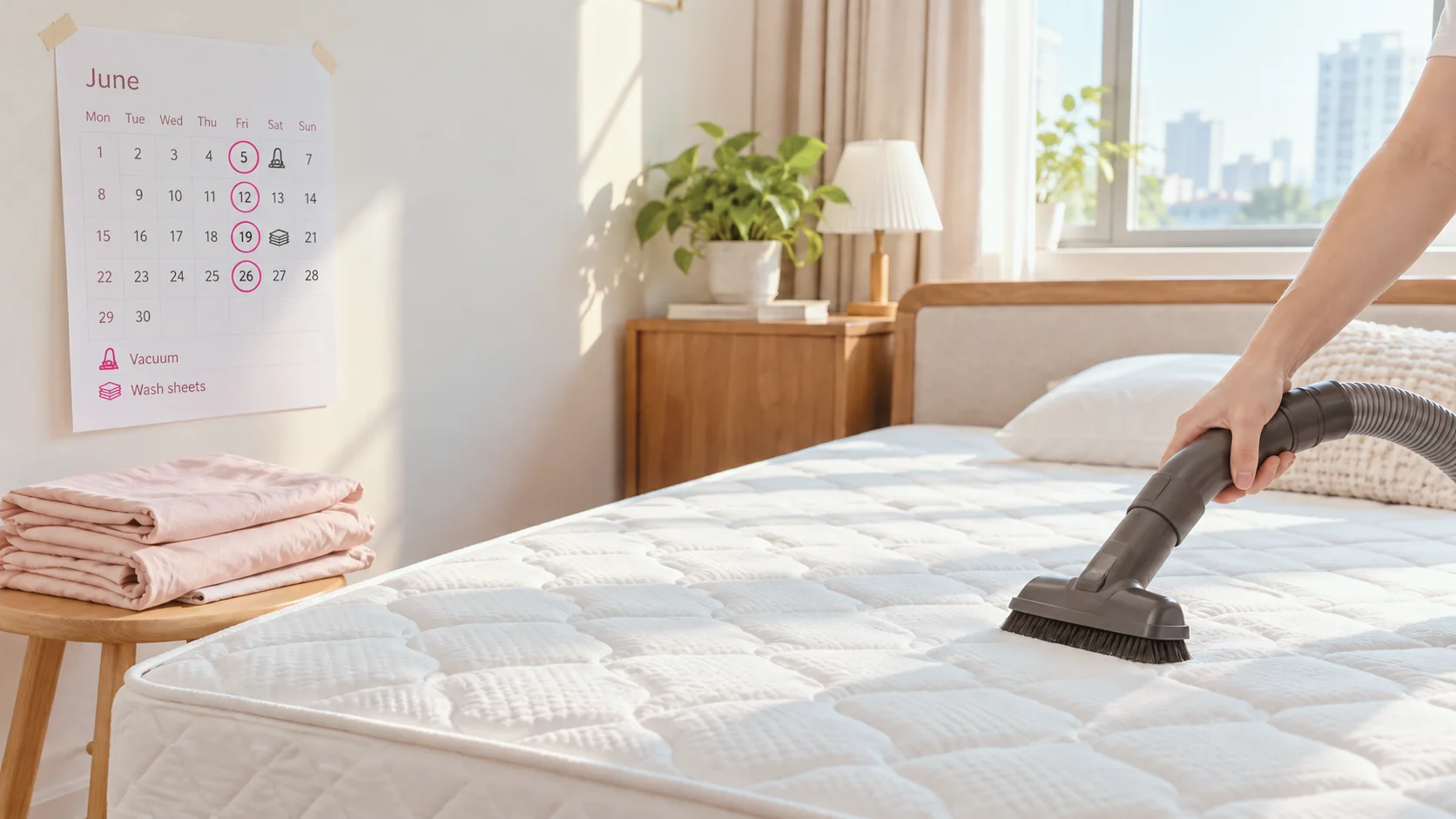
| Pull the covers back to air the bed | Every morning | A few minutes before making the bed so moisture can escape |
| Wash sheets and pillowcases | Weekly | More often after heavy sweating, illness, or if pets sleep with you |
| Vacuum the mattress | Every 1–2 weeks | Soft brush head; go over edges and seams |
| A thorough clean at home (deodorize, spot clean) | Every 2–3 months | For example, vacuum then deodorize with baking soda |
| Rotate the mattress | 6–12 months (older innerspring: 2–6 months) | Helps it wear evenly; check the maker's advice for zoned mattresses |
| Professional deep clean | About every 6 months | With a mattress protector you can go longer |
The 2–3 month interval for a thorough home clean comes from a VnExpress mattress care guide; the roughly 6-month interval for cleaning the mattress itself is the Sleep Foundation's suggestion. If you have not deodorized a mattress before, see how to clean a mattress with baking soda.
5 signs your mattress needs cleaning now
The schedule above is the baseline. If you notice any of these, do not wait:
1. It smells musty, sweaty or of urine
A smell means dirt has soaked into the fabric and padding. Air freshener only hides it for a few days; it needs proper deodorizing, and urine is much easier to deal with early.
2. Yellow stains, drink marks or mold spots appear
Fresh stains come out far more easily than ones that have dried into the fibers. Mold spots need drying and treating straight away, since mold spreads fast in damp conditions.
3. You sneeze, itch or get rashes in bed
If you keep sneezing or itching in bed, or allergies get worse outside the usual season, Vinmec notes an old mattress may be to blame, since dust mite droppings in it can cause breathing problems.
4. Someone was ill, a child wet the bed, or pets were on it
After an illness, wash all the bedding and clean the mattress surface. If pets sleep on the bed, change the sheets more often than weekly.
5. After a humid spell, long rains, or a spill
According to the EPA, damp items dried within 24–48 hours will usually not grow mold. Blot and dry spills at once, and after weeks of humid weather, flip the mattress to check the underside.
Homes with kids or allergies: go further
For people allergic to dust mites or with asthma, a VnExpress Health summary (from WebMD) recommends:
- Use dust-mite-proof covers on the mattress, pillows and duvet.
- Wash bedding weekly in water at least 54°C and dry it (check the fabric label first).
- Vacuum weekly with a HEPA filter, wear a mask, and do it during the day so dust settles before bedtime.
- Keep humidity around 30–50%; dust mites struggle to breed below 25°C.
- Keep cats and dogs off the bed.
Is cleaning more often always better?
Not quite. The frequent jobs are the dry ones: airing the bed, washing sheets, vacuuming. Every time a mattress gets wet, whether spot cleaning or a full clean, it must dry completely before you sleep on it. The Sleep Foundation warns against getting a mattress too wet, especially foam; water trapped in the core turns into smells and mold.
Do
- Vacuum and change sheets regularly
- Use a washable mattress protector
- Treat spills while they are fresh
- Dry it fully after any wet cleaning
Don't
- Make the bed tightly the moment you get up
- Mask smells with air freshener
- Wet-clean the mattress again and again
- Sleep on it while it is still damp
What to do yourself, and when to call a pro
Airing, changing sheets, vacuuming, deodorizing with baking soda and blotting fresh spills are all easy at home. Cleaning deep inside the core, old stains, dried urine or mold need spray-and-extract machines that pull dirt and water back out, then dry the mattress fast.
Time for a deep clean?
HighCleanVN cleans mattresses at your home: stains, odors, fine dust and dust mites, dry in 2 hours so you can use it the same day. Call or book online for a quote first.
Frequently asked questions
Does a new mattress need cleaning?
No cleaning yet, but put a protector on from day one. The Sleep Foundation says a protector lets you clean the mattress less often, and most are machine-washable.
How often should a mattress be replaced?
Vinmec suggests roughly every 6–8 years depending on the type; latex can last longer. Replace it sooner if it sags, you wake with back pain, or allergies get worse.
Do sheets need a hot wash?
For people allergic to dust mites, yes: at least 54°C weekly if the label allows. Otherwise a weekly wash is enough.
Can I use an ordinary vacuum on my mattress?
Yes, with the soft brush and crevice tool. In homes with allergies, a HEPA vacuum traps fine dust better.
How often should a mattress go in the sun?
Spring and bonded-fiber mattresses can have a few hours of gentle morning sun now and then, avoiding harsh midday sun. Never put natural latex in the sun.

Huy Bui KhanhTechnician
Hi, I'm Huy, a technician at HighCleanVN. Every day, I visit customers' homes to clean their mattresses and sofas. Here, I share practical tips and experience on mattress and sofa cleaning, drawn straight from my daily work.
Further reading
 How to Clean Your Mattress at Home with Baking Soda in 6 StepsWith just a vacuum and baking soda you can remove dust and odors from your mattress at home. Six simple steps that clean without soaking it.